
People & training
Selected with care. Trained without a break.
Four checks before anyone joins. A five-stage training cycle that never stops after day one. Taught in the guard’s own language, and enforced by the system that builds the roster.
Selection
Four checks before anyone joins.
We select for integrity, discipline and responsibility, then match each person to the needs of the post: security protocols, emergency response or facility work.
Background verification
Identity, address and history checked, with the status kept on every employee’s file.
Physical fitness
A fitness assessment, because the job means long shifts on your feet.
Aptitude test
Reading a situation, following orders and reporting it clearly.
Personal interview
We select for integrity, discipline and responsibility, and match each person to the post.
Continuous training
Training that never stops after day one.
Stage 1: Induction
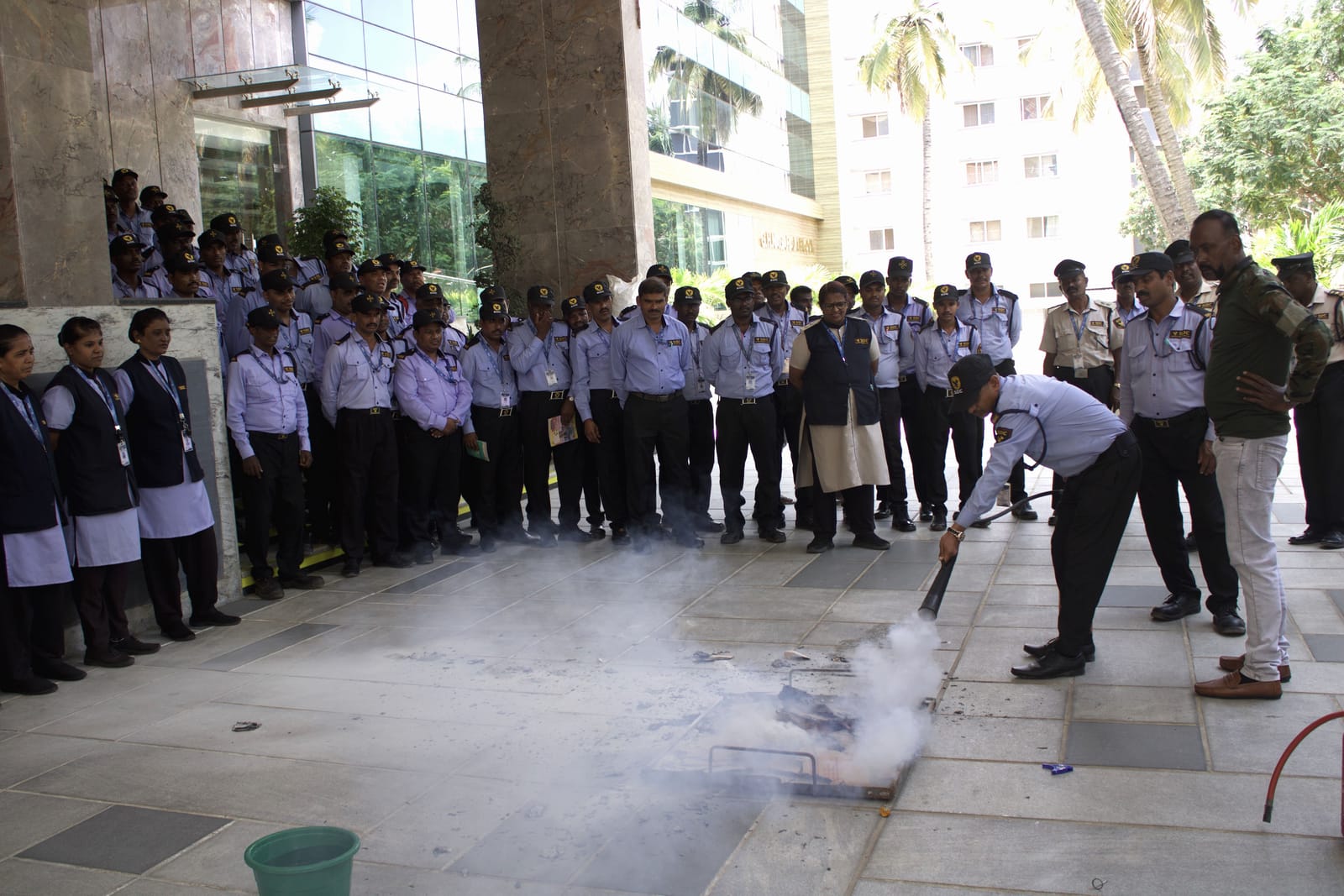
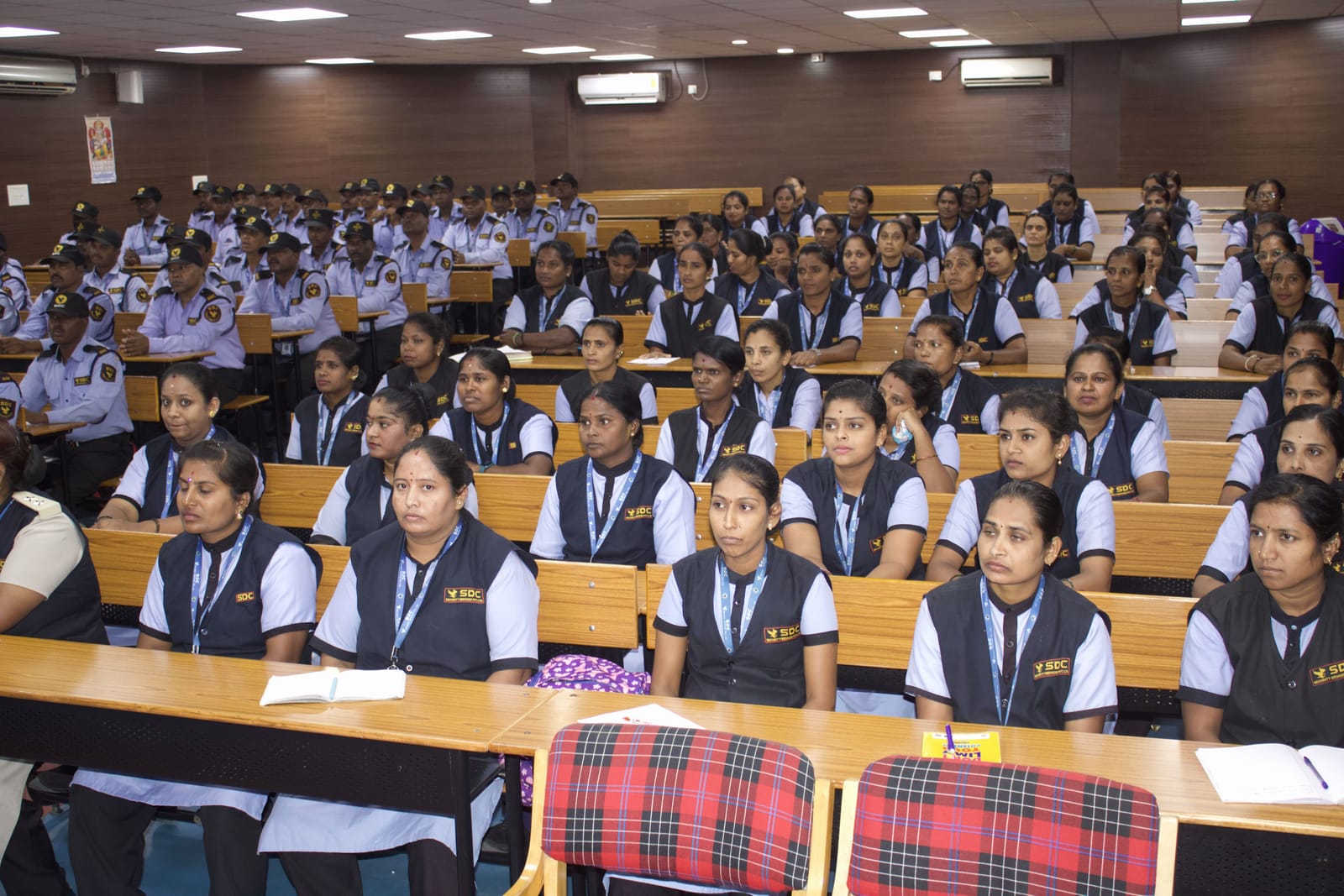
PSARA basic training in the classroom and the field: fire, first aid, conduct and SOS.
Stage 2: Your site
A site induction on your layout, codes and contacts, before the first shift.
Stage 3: Your industry
Specialist modules for hospital, campus, corporate, logistics and industrial sites.
Stage 4: Refreshers
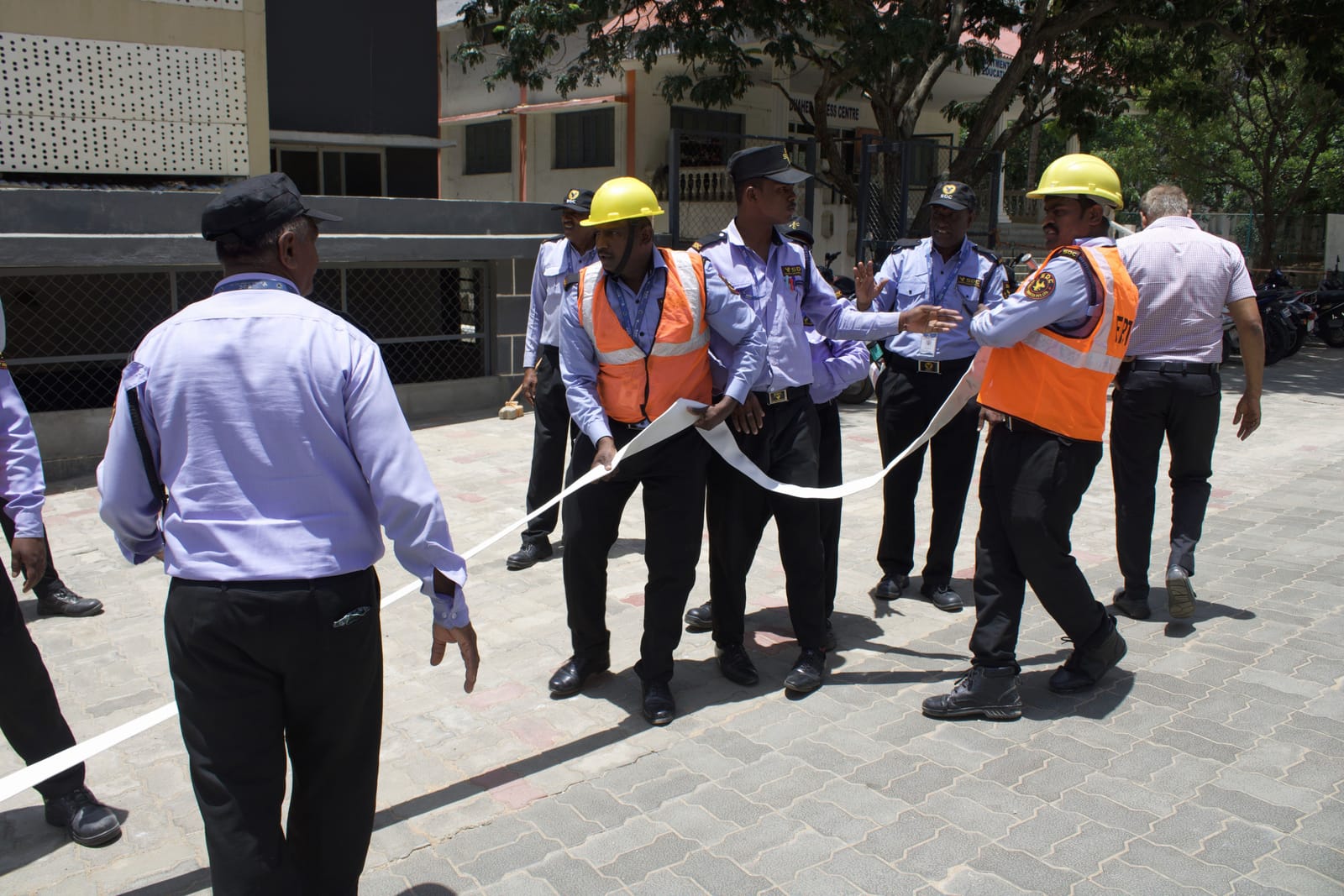
Every 6 to 12 months: mock drills, legal powers, reporting and courtesy.
Stage 5: Leadership
Shift supervisors, control room operators and in-house trainers.
Example: healthcare
A hospital guard’s training path.
The same structure runs for education, corporate, logistics, manufacturing, retail, hospitality, banking and residential sites, with modules for each.
01 · Before the first shift
- PSARA basic security training
- Fire safety and evacuation
- First aid and CPR
- Conduct, POSH and anti-bribery
- Emergency response and SOS
- Site induction
02 · Hospital specialist
- Hospital security and patient dignity
- De-escalation in emergency
- Code Pink: infant abduction
- Infection control
- Biomedical waste segregation
03 · Refreshers
- Mock drill and evacuation
- Legal powers and reporting
- Courtesy and patient care
Taught in the guard’s own language
Kannada, Hindi or English.
People learn best in the language they think in. Training runs in Kannada, Hindi or English, and the guard app speaks all three.
- ಕನ್ನಡKannada
- हिन्दीHindi
- EnglishEnglish
Records in SDC Command
Enforced, not just recorded.
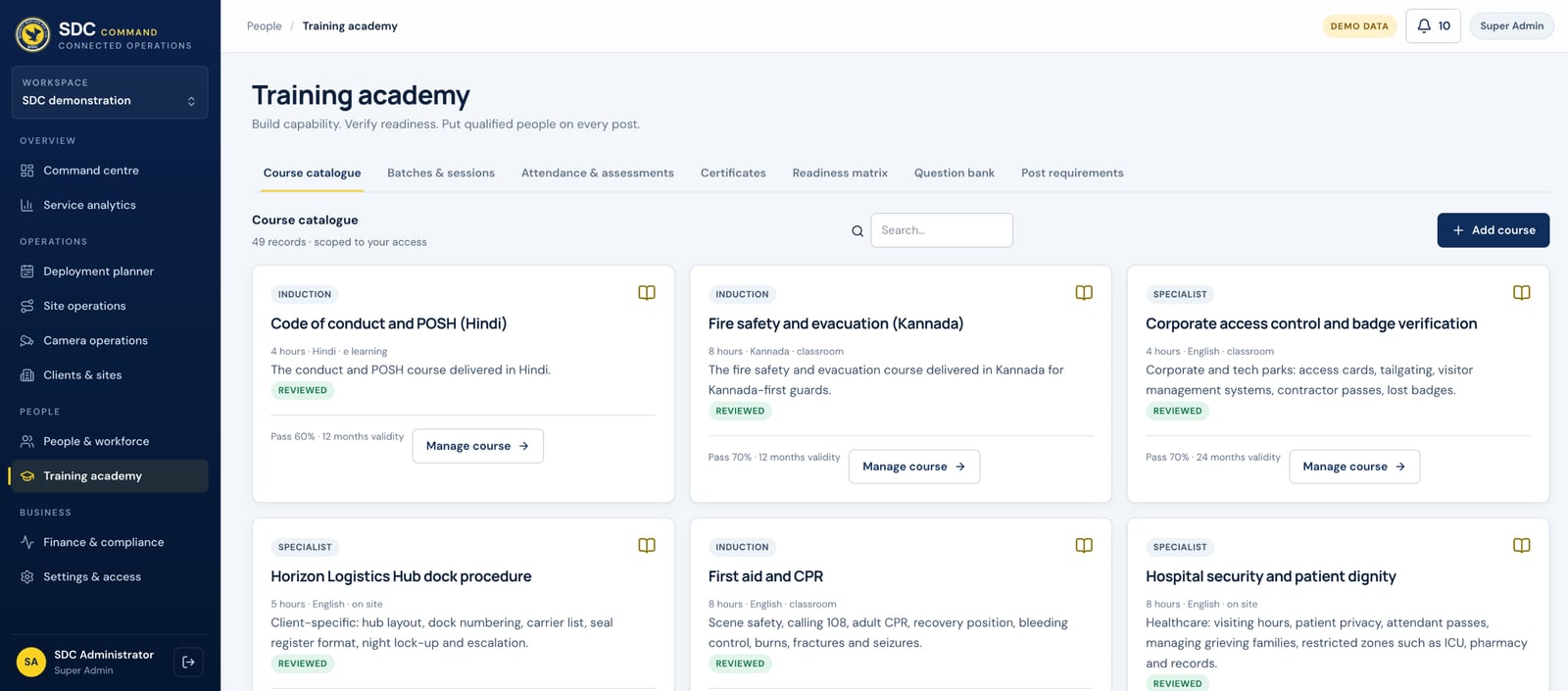
Every certificate has an expiry date. If a guard’s training for a post has lapsed, the planner will not roster them to it.
- Course completed
The guard passes the course in the SDC Training Academy.
- Certificate issued
Recorded on the guard’s file, with an expiry date.
- Refresher due
Refreshers come round every 6 to 12 months.
- Lapsed? Not rostered.
The planner will not put that guard on a post that needs it.
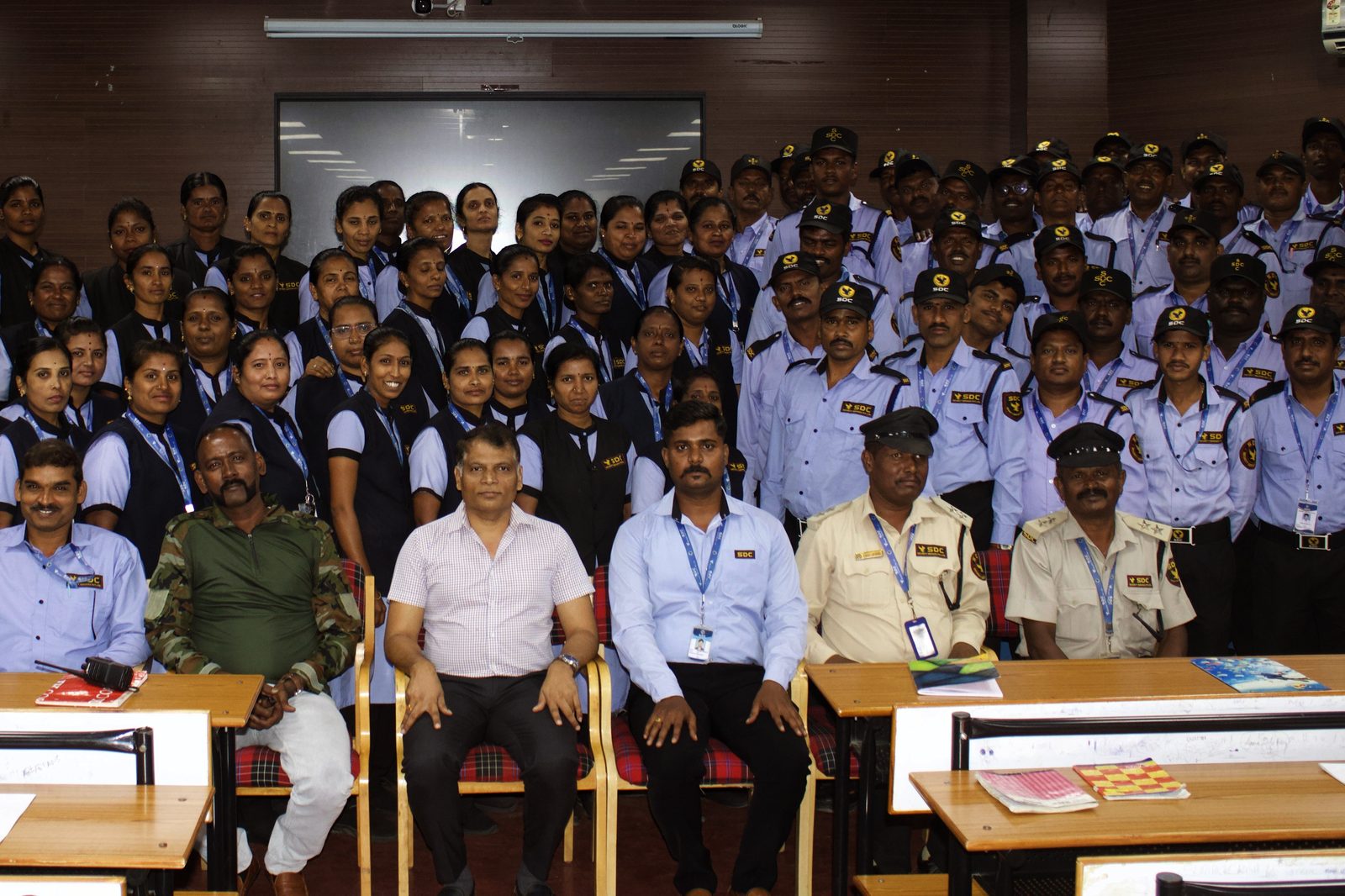
The ex-servicemen advantage
Trained by people who have served.
SDC was founded by Lokesh PN after 17 years in the Indian Army, with specialised training at the Army Institute of Physical Training, Pune. That discipline shapes how we train: clear orders, practised drills and supervisors who lead from the front.
Next step
Trained people for your site.
Tell us about your site. We will show you the training path your guards follow before the first shift.